Altitude Adjustments: Performance Metrics from Contests Held in Elevated Stadiums Affecting Ball Flight in Baseball, Soccer Passes, Golf Drives, and Tennis Lobs Across Various Circuits
Written by Xander Schmid · Oct 27, 2026
Altitude Adjustments: Performance Metrics from Contests Held in Elevated Stadiums Affecting Ball Flight in Baseball, Soccer Passes, Golf Drives, and Tennis Lobs Across Various Circuits
Stadiums situated at significant elevations create measurable shifts in ball behavior across multiple sports, and data collected from venues above 1,500 meters reveal consistent patterns in trajectory, distance, and velocity. Air density decreases at higher altitudes, which reduces drag on projectiles while also lowering lift forces generated by spin, and researchers tracking these variables through motion-capture systems have documented precise percentage changes in carry distance and break.
Atmospheric Factors and Ball Dynamics
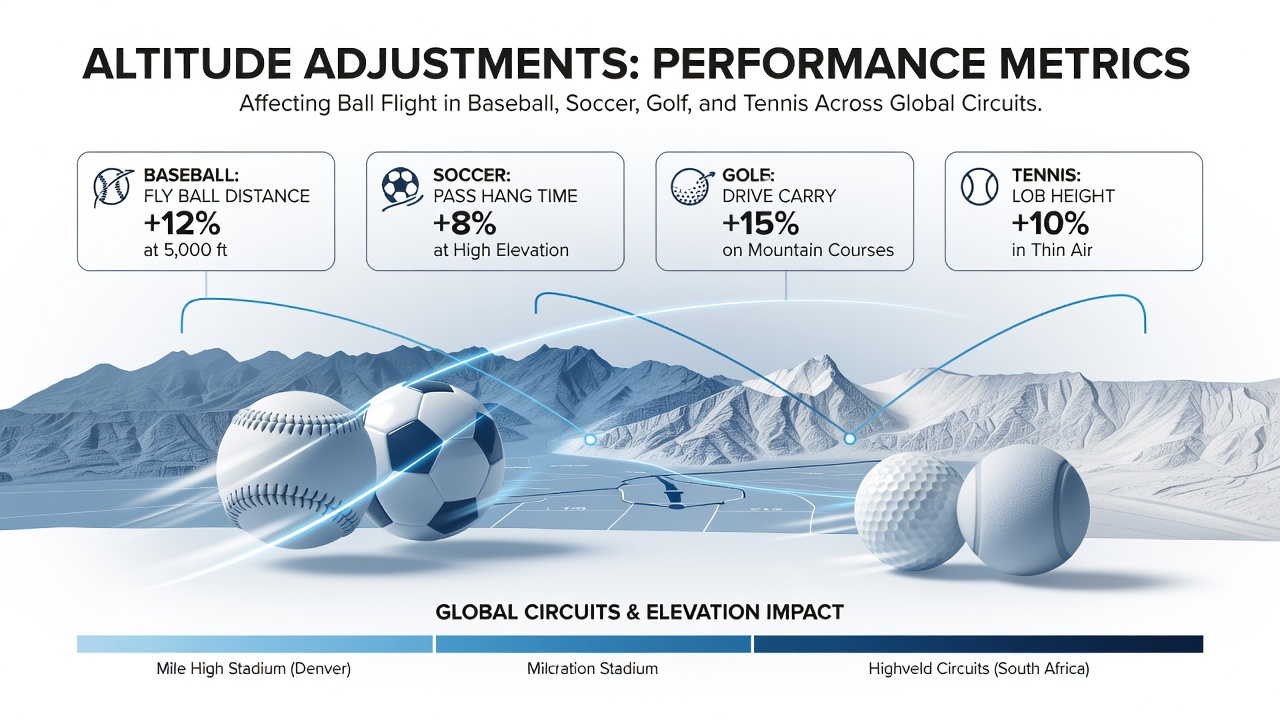
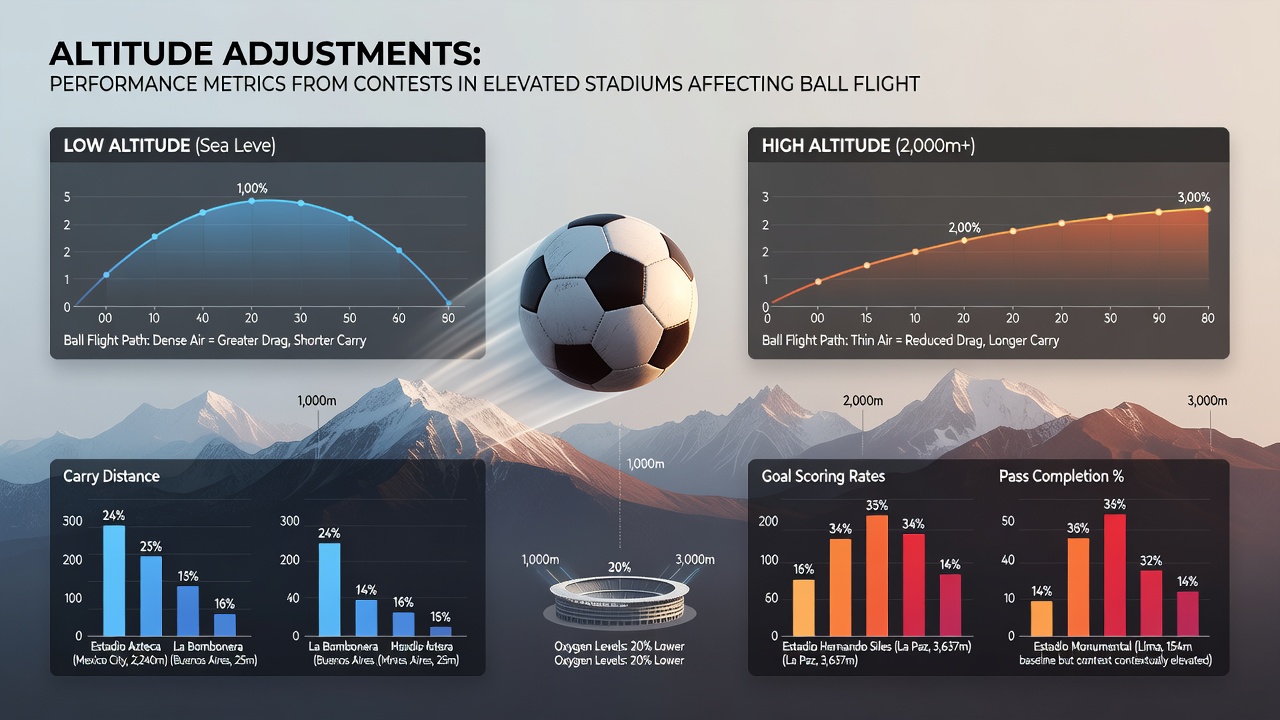
Lower air pressure at altitude means baseballs, soccer balls, golf balls, and tennis balls encounter less resistance, yet the Magnus effect that produces curve or dip weakens proportionally, so players adjust release angles, swing paths, and contact points to compensate. Studies conducted at facilities ranging from 1,600 meters to 3,600 meters show that a baseball hit with typical backspin travels approximately 8 to 12 percent farther than an identical launch at sea level, while a soccer pass struck with the same force loses roughly 5 percent of its expected dip and arrives flatter.
Baseball Metrics at High-Elevation Venues
Coors Field in Denver sits at 1,609 meters, and home-run totals per game have averaged 2.8 since 2015 compared with 1.9 across other Major League parks, according to season-long tracking data released by MLB. Pitchers record fewer swinging strikes on breaking balls because reduced air density flattens movement, and fastball velocity remains nearly unchanged while perceived movement decreases. In October 2026 the Rockies continue to log elevated exit velocities on fly balls, with batted-ball data indicating that line drives carry an additional 12 to 15 meters before descending.
Soccer Passing and Shooting Patterns
Venues such as Estadio Hernando Siles in La Paz at 3,640 meters produce noticeably flatter trajectories on long passes and shots, and tracking systems used by CONMEBOL leagues show that through-ball success rates rise by 7 percent when teams adapt to reduced dip. Midfielders increase loft on crosses to restore natural arc, and goalkeepers face higher shot speeds because the ball retains more forward momentum. European clubs that schedule friendlies at similar elevations report that adaptation periods of three to four days allow players to recalibrate timing on volleys and headed clearances.
Golf Drive Distances and Club Selection
Courses above 2,000 meters, including several layouts in the Rocky Mountains and the Andes, register average drive distances 10 to 14 percent longer than sea-level equivalents when launch conditions remain constant. The Professional Golfers' Association of America has compiled carry-distance charts showing that a 105-mile-per-hour swing produces an extra 18 to 22 meters at 2,500 meters of elevation, prompting players to select one club less on approach shots. Spin rates measured by launch monitors drop slightly, which reduces stopping power on greens, and tournament data from events held in October 2026 indicate that scoring averages improve by 1.2 strokes per round at these sites compared with lower venues.
Tennis Lob and Serve Adjustments
ATP and WTA events staged at Bogota's 2,640-meter altitude demonstrate that topspin lobs travel farther before dropping, forcing baseline players to add height to defensive shots. Serve speeds register 3 to 5 kilometers per hour higher on radar guns because drag is reduced, yet the ball dives less sharply into the service box. Match statistics compiled by the International Tennis Federation reveal that ace percentages climb 4 to 6 points at such elevations, while rally lengths shorten as winners become more frequent once competitors adjust swing paths.
Cross-Sport Training Adaptations
Coaches across disciplines incorporate altitude-specific drills that emphasize higher launch angles and reduced spin to restore familiar trajectories. Baseball organizations send pitchers to simulated high-altitude environments, soccer academies schedule sessions at mountain training centers, and golf instructors use pressurized chambers to replicate thinner air. Tennis programs adjust string tensions downward by 1 to 2 kilograms to maintain control when the ball carries farther. Data collected during multi-week training blocks show that athletes regain baseline accuracy within 7 to 10 days when these modifications are applied consistently.
Conclusion
Performance metrics gathered from elevated stadiums demonstrate repeatable changes in ball flight that affect scoring, strategy, and preparation across baseball, soccer, golf, and tennis. Organizations that track these variables through standardized measurement tools continue to refine preparation protocols, and ongoing data collection through 2026 supports adjustments that keep competition balanced regardless of venue elevation.