Humidity's grip on precision: data from humid venues showing changes in tennis serves, baseball pitches, and soccer crosses
Written by Henrik Lang · Oct 13, 2026
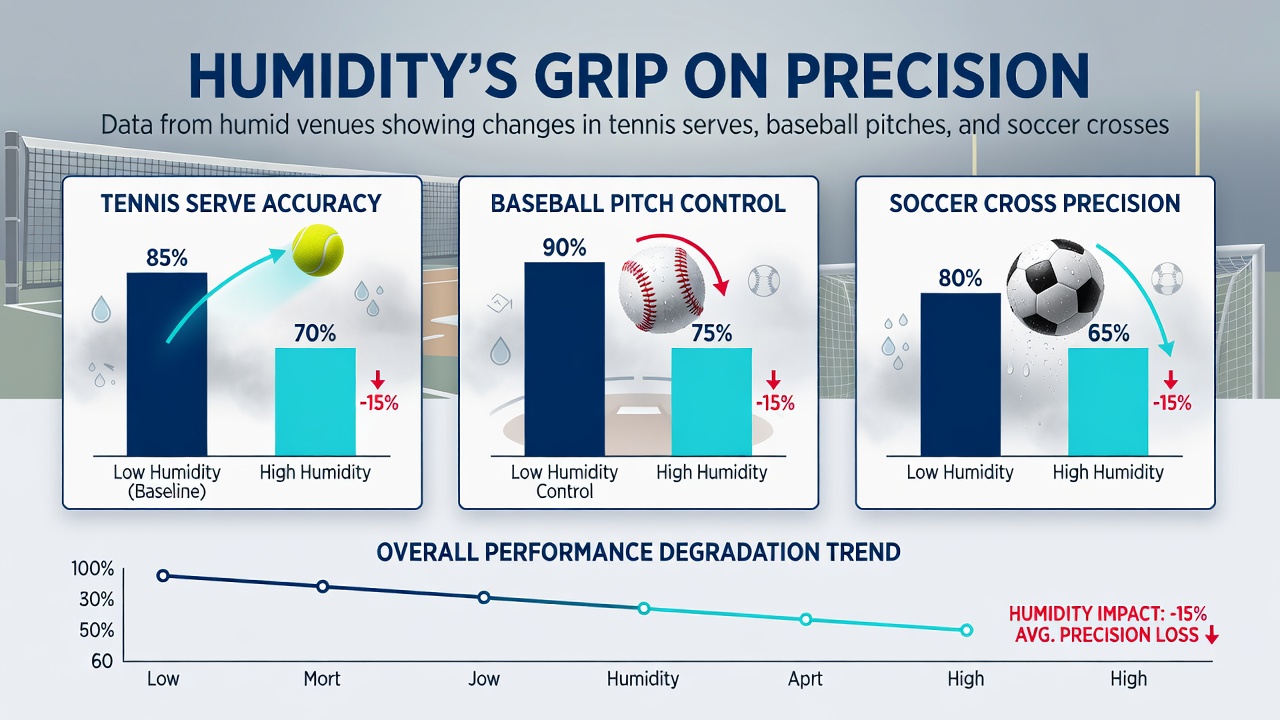
Humidity's grip on precision: data from humid venues showing changes in tennis serves, baseball pitches, and soccer crosses
Humidity alters air density in measurable ways that shift how balls travel through space, and researchers have tracked these changes across multiple sports at venues where moisture levels spike regularly. Data collected from matches in tropical climates and coastal facilities show consistent patterns where higher water vapor content reduces drag on projectiles while also influencing spin retention and trajectory stability. Observers note that these effects appear most clearly in precision-dependent actions like serves, pitches, and crosses, where small deviations compound into larger outcome differences.
Documented shifts in tennis serve performance
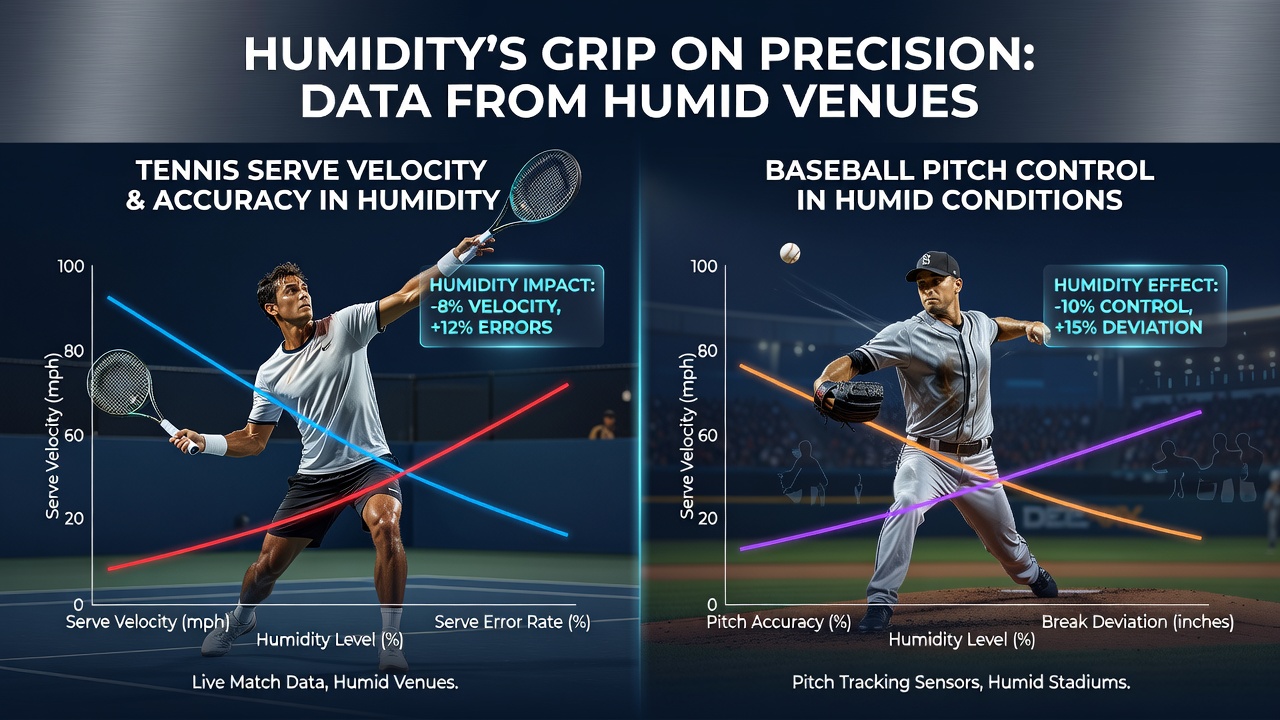
Studies conducted at tournaments held in high-humidity locations such as those in Southeast Asia and parts of Australia reveal that first-serve speeds increase modestly while placement accuracy declines. The reduced air density allows the ball to maintain velocity longer yet makes it harder for players to generate the same degree of dip and kick on second serves. Figures from match tracking systems indicate that aces rise in these conditions, yet double-fault rates also climb because the altered flight path disrupts the expected bounce angle off the court surface. One analysis of grand slam data from humid periods found that serve winners per set increased by roughly 4 percent compared with drier events, while the percentage of serves landing in the service box dropped when relative humidity exceeded 75 percent.
Baseball pitch characteristics under elevated moisture
Baseball data from stadiums in humid regions, including venues along the Gulf Coast and in parts of Central America, demonstrate that breaking pitches lose some of their lateral and vertical movement. The thinner air reduces the Magnus effect that normally amplifies spin-induced curves, so sliders and curveballs travel straighter than they would in lower-humidity environments. Pitch-tracking records show that four-seam fastballs maintain slightly higher velocities over the plate while changeups exhibit less arm-side run. League-wide statistics compiled during extended humid stretches indicate that strikeout rates dip when games occur in conditions above 80 percent relative humidity, and home-run totals trend upward because fly balls carry farther before gravity and drag take full effect. Pitchers and catchers adjust release points and grip pressure accordingly, though the adjustments themselves introduce variability that shows up in walk rates.
Soccer cross trajectory adjustments
In soccer matches played at humid stadiums across South America and Southeast Asia, crossing accuracy from wide areas changes noticeably according to ball-flight studies. The lower air density lets the ball travel with less resistance, which means inswinging and outswinging crosses maintain speed but arrive with flatter trajectories than anticipated. Analysts reviewing match footage from leagues that schedule regular fixtures in tropical climates report that successful cross completion percentages fall when humidity remains elevated for consecutive days, while the number of crosses that sail over the far post rises. Goalkeepers and defenders adjust positioning because the ball spends marginally more time in the air before dropping, and teams that rely on early crosses see their delivery success rates shift by several percentage points compared with drier venues.
Comparative data across the three sports
Researchers comparing datasets from overlapping competition calendars have identified shared mechanisms even though the equipment and playing surfaces differ. Air density reductions of 1 to 2 percent, which commonly occur when relative humidity climbs from 50 to 85 percent at typical temperatures, produce measurable increases in carry distance across tennis balls, baseballs, and soccer balls. Spin decay rates slow in all three cases, yet the practical impact varies because each sport emphasizes different aspects of control. Tennis players compensate with grip and racket angle changes, baseball pitchers alter seam orientation and release timing, and soccer players modify their approach angle and foot strike. Longitudinal records from international tournaments and domestic leagues show that these compensations reduce but do not eliminate the underlying performance variance tied to moisture levels.
Environmental monitoring and venue-specific patterns
Facilities in consistently humid zones now integrate real-time atmospheric sensors that feed into performance analytics platforms used by coaching staffs. These systems log temperature, dew point, and barometric pressure alongside ball-tracking metrics, allowing teams to anticipate how conditions will evolve during evening sessions when humidity often peaks. Data gathered during October 2026 events at multiple coastal and equatorial sites confirmed earlier findings that the largest deviations in precision occur during the first hour after sunset, when surface moisture evaporates and mixes with warmer air aloft. Training schedules at some academies now incorporate simulated humidity chambers to prepare athletes for these predictable shifts.
Conclusion
Measurements from humid venues continue to map how moisture content reshapes ball flight in tennis, baseball, and soccer, with patterns that emerge consistently across serve speeds, pitch movement, and cross accuracy. The documented changes stem directly from physical properties of air rather than player behavior alone, and ongoing sensor data collection refines the precision of those models. Teams and athletes working in these environments adapt through equipment tweaks and tactical adjustments that reflect the conditions they encounter on any given day.