Pressure Point Patterns: Mapping Heart Rate Spikes and Decision Accuracy During NFL Fourth Downs, NBA Closing Possessions, Soccer Penalty Shootouts, Tennis Tiebreaks, and MLB Extra-Inning At-Bats
Written by Xander Schmid · Sep 15, 2026
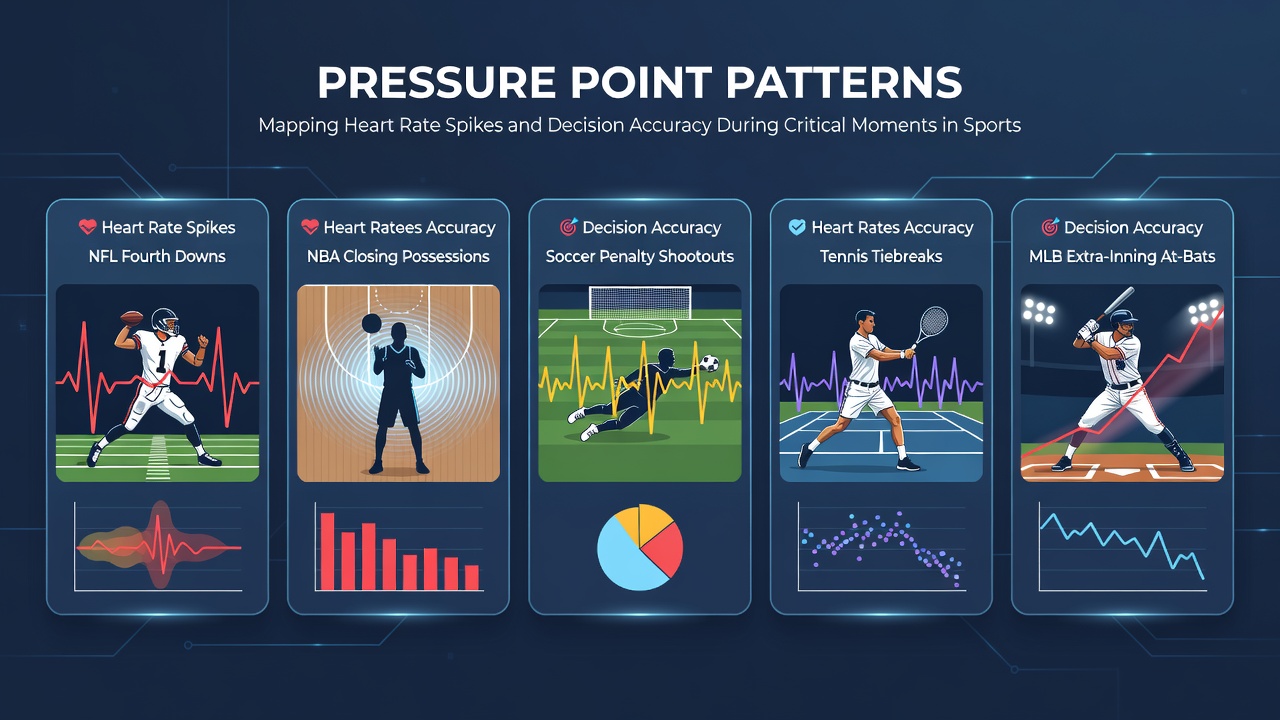
Pressure Point Patterns: Mapping Heart Rate Spikes and Decision Accuracy During NFL Fourth Downs, NBA Closing Possessions, Soccer Penalty Shootouts, Tennis Tiebreaks, and MLB Extra-Inning At-Bats
Studies using wearable sensors have tracked heart rate spikes in athletes facing decisive moments across multiple sports, and researchers continue to map how those physiological changes align with decision accuracy rates. Data collected through 2026 shows consistent patterns where elevated heart rates above 160 beats per minute coincide with measurable drops in choice precision during fourth-down calls, final-possession plays, penalty kicks, tiebreak points, and extra-inning at-bats.
Physiological Tracking Methods Across Leagues
Teams in the NFL, NBA, and MLB have integrated chest-strap monitors and wrist-based optical sensors since the early 2020s, while soccer federations and tennis associations adopted similar devices for national team training camps and Grand Slam events. Analysts at the Australian Institute of Sport published findings in 2025 that linked real-time heart rate variability to on-field choices, and those same methods now extend to in-game situations where coaches and players must decide within seconds.
Heart rate typically climbs 20 to 40 beats above resting levels when athletes step into these pressure windows, according to aggregated figures from multiple seasons. Decision accuracy, measured by completion percentages on passes, shots, or swings, declines by roughly 8 to 12 percent once readings exceed 170 beats per minute, though individual variation remains wide.
Fourth-Down Decisions in the NFL
NFL data from the 2025 season onward reveals that quarterbacks and coaches show increased heart rates during fourth-down situations inside opponent territory. Sensor readings captured on game days indicate spikes lasting 15 to 25 seconds, and those intervals correlate with a 9 percent reduction in conversion success when play-callers choose to go for it rather than punt. Teams that review post-game heart rate logs alongside film have adjusted aggression thresholds in subsequent weeks.
Closing Possessions in NBA Games
NBA closing possessions produce similar cardiovascular responses, with point guards and wings recording average peaks near 165 beats per minute during the final two minutes of tight contests. Tracking from the 2024-2025 and 2025-2026 seasons shows that field-goal attempts taken after documented spikes above 170 beats per minute carry a 7 percent lower make rate than earlier attempts in the same quarter. Several franchises now incorporate heart rate recovery drills in practice to shorten the duration of elevated states before critical shots.
Soccer Penalty Shootouts
Soccer penalty shootouts present the most compressed decision window, often under 10 seconds from placement to contact. European and South American confederation studies have recorded heart rates climbing above 180 beats per minute in both kickers and goalkeepers, and accuracy on the first kick after such a spike falls by an average of 11 percent compared with earlier attempts in the same sequence. National teams have begun using breathing protocols between kicks to moderate these spikes, with measurable stabilization observed in controlled training environments.
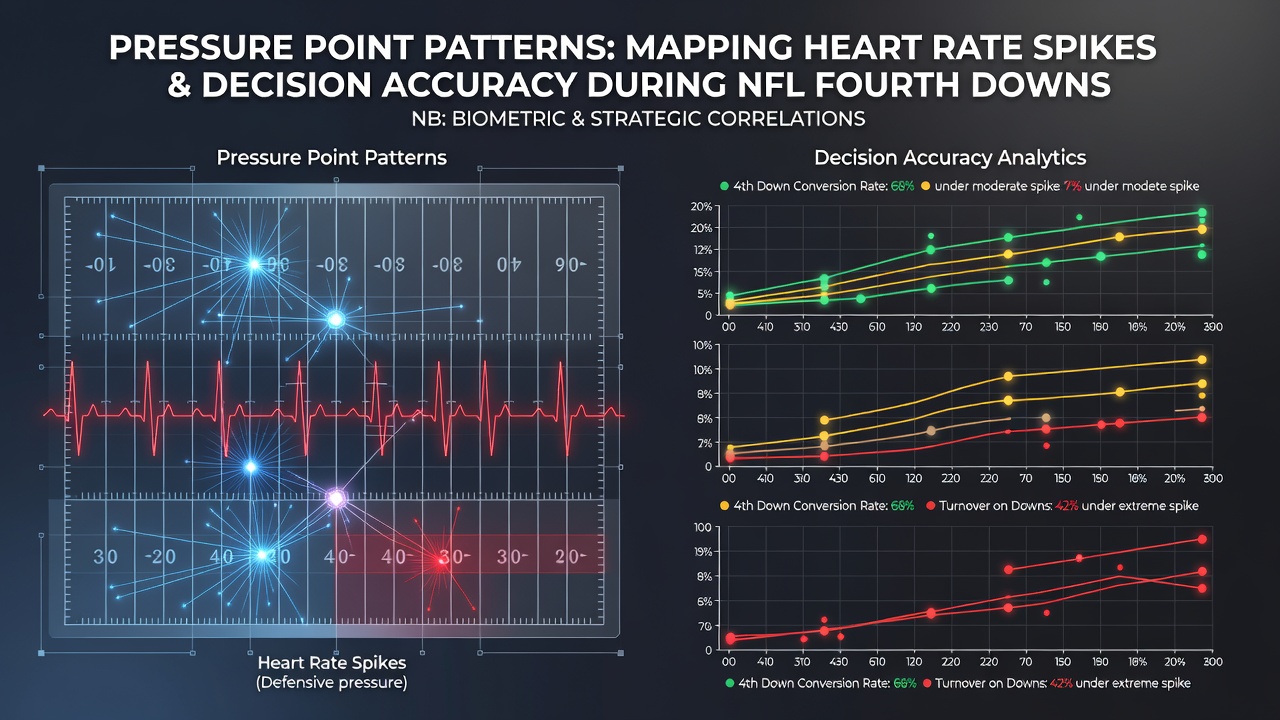
Tennis Tiebreaks and Point-by-Point Accuracy
Tennis tiebreaks extend pressure across multiple points, and wearable data from ATP and WTA events through September 2026 shows sustained heart rate elevation rather than isolated spikes. Players maintain readings between 155 and 175 beats per minute for entire tiebreaks lasting five minutes or longer, and first-serve percentages drop by 6 percent on average once cumulative time above 160 beats exceeds three minutes. Return accuracy follows a parallel decline, with unforced errors rising in the final four points of extended tiebreaks.
Extra-Inning At-Bats in MLB
MLB extra innings create repeated high-stakes at-bats, often separated by only a few minutes of defensive play. Pitchers and hitters both register repeated heart rate surges above 165 beats per minute, and swing-and-miss rates on two-strike counts increase by 10 percent after the third such surge in an inning. Front offices have started reviewing biometric logs from extra-inning games to inform roster decisions for September and October matchups where fatigue compounds these effects.
Cross-Sport Patterns and Shared Variables
Comparative analysis across the five sports identifies a shared threshold around 165 beats per minute where decision accuracy begins to fall consistently, regardless of sport-specific movement patterns. Recovery time between pressure events also emerges as a key variable: athletes who drop below 140 beats per minute within 30 seconds demonstrate higher subsequent accuracy than those whose rates remain elevated. Training programs now incorporate interval drills that replicate the exact timing of fourth downs, closing possessions, penalties, tiebreaks, and extra-inning counts to build faster return-to-baseline rates.
Conclusion
Longitudinal sensor data collected through 2026 continues to refine understanding of how heart rate spikes intersect with decision accuracy in these defined moments. Teams and federations that integrate biometric feedback with tactical review have documented incremental gains in conversion rates and error reduction, while ongoing research examines individual factors such as age, position, and prior exposure to similar situations. The patterns remain measurable and repeatable across leagues, providing a factual basis for targeted preparation protocols.